

The KOSPI’s recent advance has been nothing short of exceptional. This week, the index’s 3-year rolling return climbed above 265%. While today’s rally is impressive, the 1980s witnessed an even more dramatic run, culminating in a 3-year rolling return of 551% in December 1988. Given artificial intelligence’s need for memory and the industry’s dominance by South Korean companies, it will be fascinating to see whether Kospi’s current advance can exceed that period.
As a holder of the South Korea ETF (EWY), I’ve been closely monitoring developments to determine whether factors beyond AI are contributing to the market’s record-setting advance and how investor sentiment has evolved alongside it.
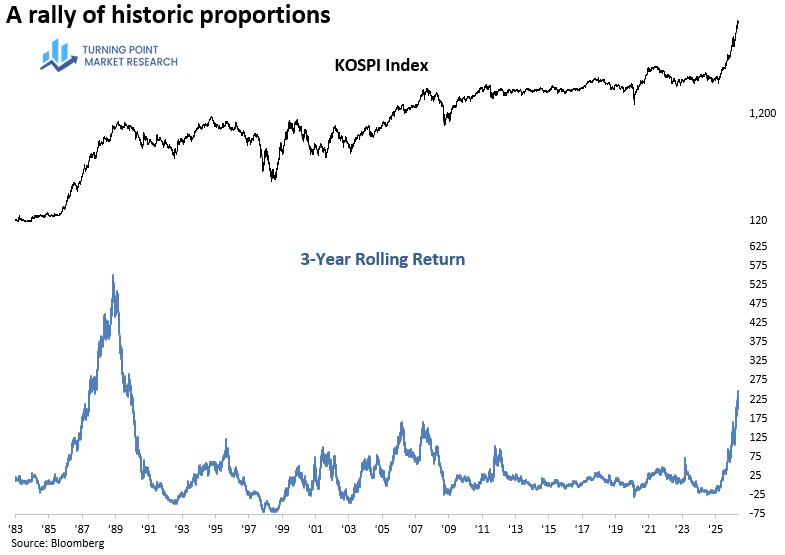
The following analysis was generated with the assistance of AI. From a comparative standpoint, the most significant factor behind the rally—aside from strong memory-related demand—is likely the recent tax incentives designed to encourage investors to shift capital back into domestic equities. During the 1985–1989 period, South Korea imposed no capital gains tax on stocks, a policy that coincided with a powerful bull market.
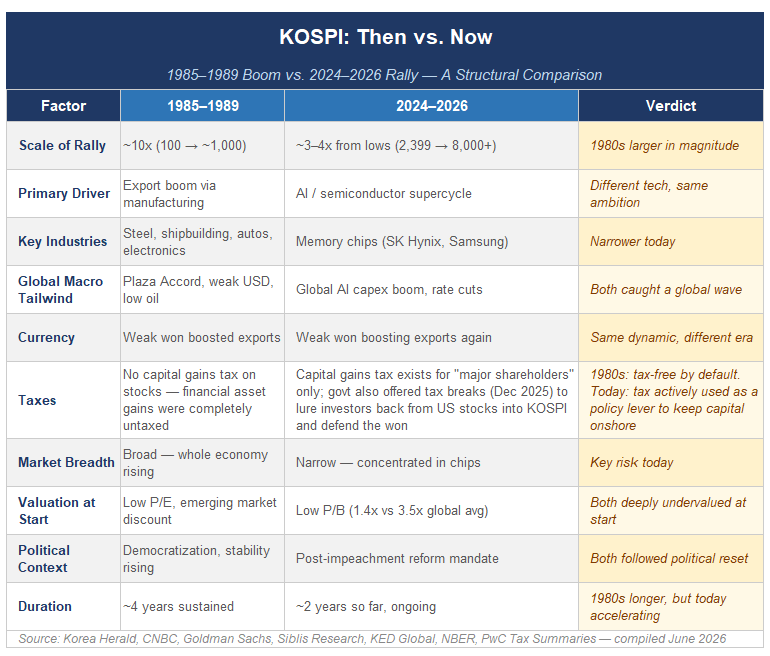
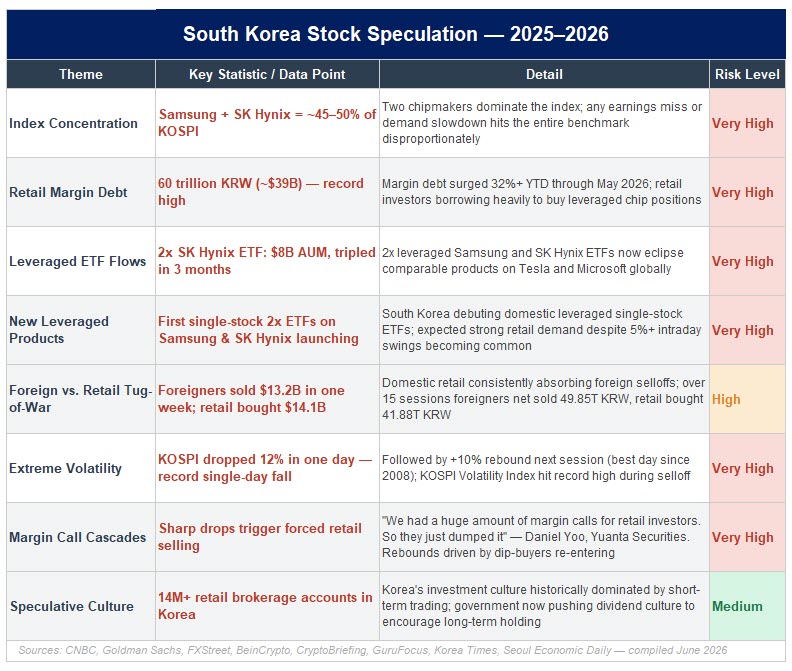
Of course, when investors are incentivized by favorable tax treatment and financial engineering introduces new products like levered ETFs, speculative enthusiasm tends to take hold.
As we’ve noted before, investors seeking global diversification through emerging market ETFs should understand that many of these vehicles are far less diversified under the hood and can be subject to speculative fervor despite their seemingly broad mandates.
Each Chart of the Week highlights a theme, idea, or historic event that stood out to us. If you find it interesting, feel free to share it with friends or colleagues.
Visit www.tpmarketresearch.com to learn more about our research offering.