

Thursday provided another striking example of how the growing influence of mega-cap technology has altered the behavior of the S&P 500. While the index rallied a meaningful 1.66%, two sectors declined by more than 2%, while another two fell by over 1.2%—an unusually divergent outcome for such a strong index-level advance. Much of the S&P 500’s gain was driven by technology, which surged more than 5% after a leveraged hedge fund tied to the AI trade was reportedly forced to unwind positions, removing a significant source of selling pressure from the space. The resulting rebound in the AI complex had an outsized impact on the capitalization-weighted index, even as weakness persisted across several other areas of the market.
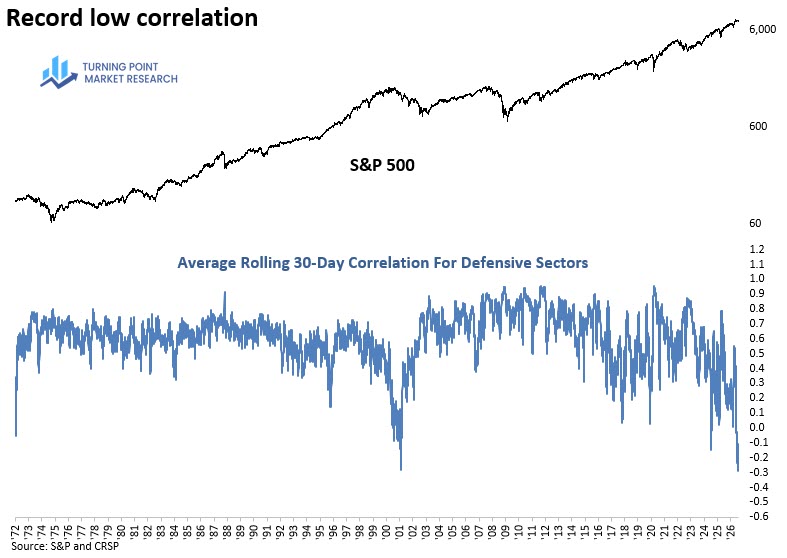
This type of divergence has become increasingly common as mega-cap technology companies have assumed a larger role in determining the direction of the S&P 500. As a result, sector correlations relative to the index have trended lower for years, particularly among defensive groups such as consumer staples, health care, real estate, and utilities. As illustrated in the table below, 30-day rolling correlations versus the S&P 500 are currently sitting at or near record lows.
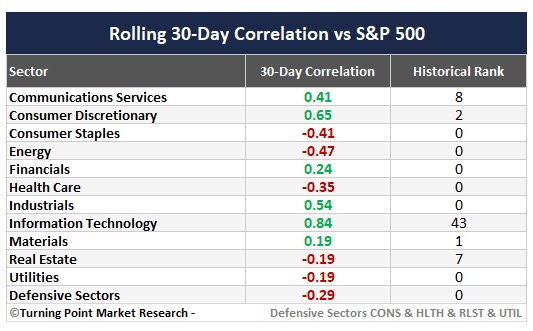
On Friday, the average 30-day rolling correlation of defensive sectors fell to a new record low of -0.29. Before the current environment, the only comparable period occurred during the Dot-com era, when technology stocks similarly dominated market leadership.
Each Chart of the Week highlights a theme, idea, or historic event that stood out to us. If you find it interesting, feel free to share it with friends or colleagues.
Visit www.tpmarketresearch.com to learn more about our research offering.