

This week, several commentators pointed out that the S&P 500 closed below its December 2025 low and framed the move as a negative development. After running an initial screen, we refined the analysis to better match current conditions. Specifically, we required the breakdown to materialize within 7% of a five-year high, which removed episodes that occurred deep into major bear markets. We also limited the sample to precedents between January and March, aligning with the current setup. These additional filters help ensure the historical comparisons better reflect the current market backdrop.
The premise behind this signal is that a strong market trend should not break below the December low during the seasonally favorable November–May period for stocks.
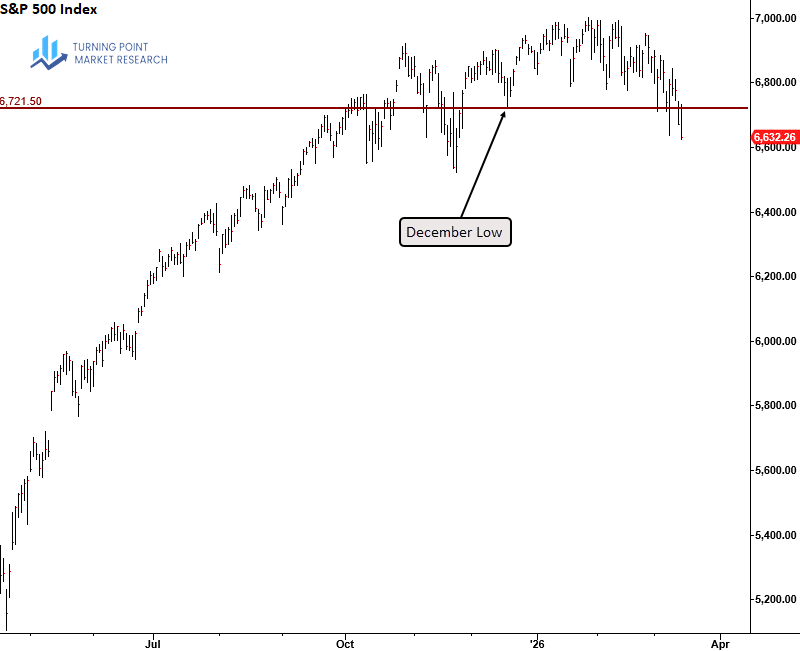
There appears to be some validity to the logic of a close below the December low. Over the following three months, the S&P 500 tended to be weak, though not materially so. Notably, in the last three occurrences—2016, 2022, and 2025—the maximum losses over the subsequent three months were 8%, 7%, and 14.5%, respectively.
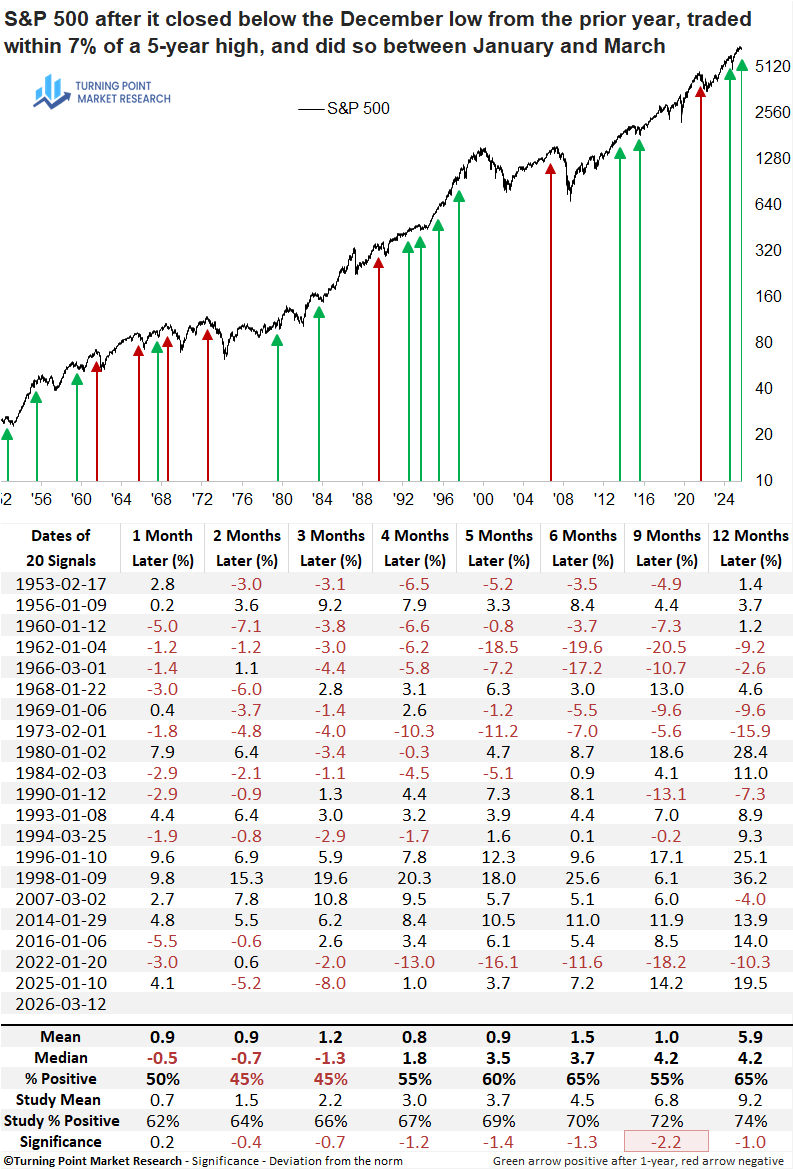
The problem with studies like this and many others, like the January Barometer, is what to do when they fail. For instance, if the Iran escalation ends next week and stocks surge higher, how do you respond? Since many of these studies are essentially reflections of the prevailing trend, why not simply use a trend filter instead? That provides a straightforward way to increase or decrease exposure.
Each Chart of the Week highlights a theme, idea, or historic event that stood out to us. If you find it interesting, feel free to share it with friends or colleagues.
Visit www.tpmarketresearch.com to learn more about our research offering.